<?xml version="1.0" encoding="utf-8"?><feed xmlns="http://www.w3.org/2005/Atom" ><generator uri="https://jekyllrb.com/" version="3.10.0">Jekyll</generator><link href="https://spaccapeli.com/feed.xml" rel="self" type="application/atom+xml" /><link href="https://spaccapeli.com/" rel="alternate" type="text/html" /><updated>2025-09-21T17:49:15+00:00</updated><id>https://spaccapeli.com/feed.xml</id><title type="html">daniele spaccapeli</title><subtitle>product builder writing about tech and tinkering on projects</subtitle><entry><title type="html">Pareto validation</title><link href="https://spaccapeli.com/pareto-validation/" rel="alternate" type="text/html" title="Pareto validation" /><published>2024-04-22T00:00:00+00:00</published><updated>2024-04-22T00:00:00+00:00</updated><id>https://spaccapeli.com/pareto-validation</id><content type="html" xml:base="https://spaccapeli.com/pareto-validation/"><![CDATA[<p>During my university years and a little bit after, I was involved in the VC and startup scene where I lived. Especially during university, I was the president of a student association for tech entrepreneurship, I got to meet a lot of investors. I spent time in incubators and accelerators. Talking to founders about raising money and witnessing some seed and series A rounds was part of my routine.</p>

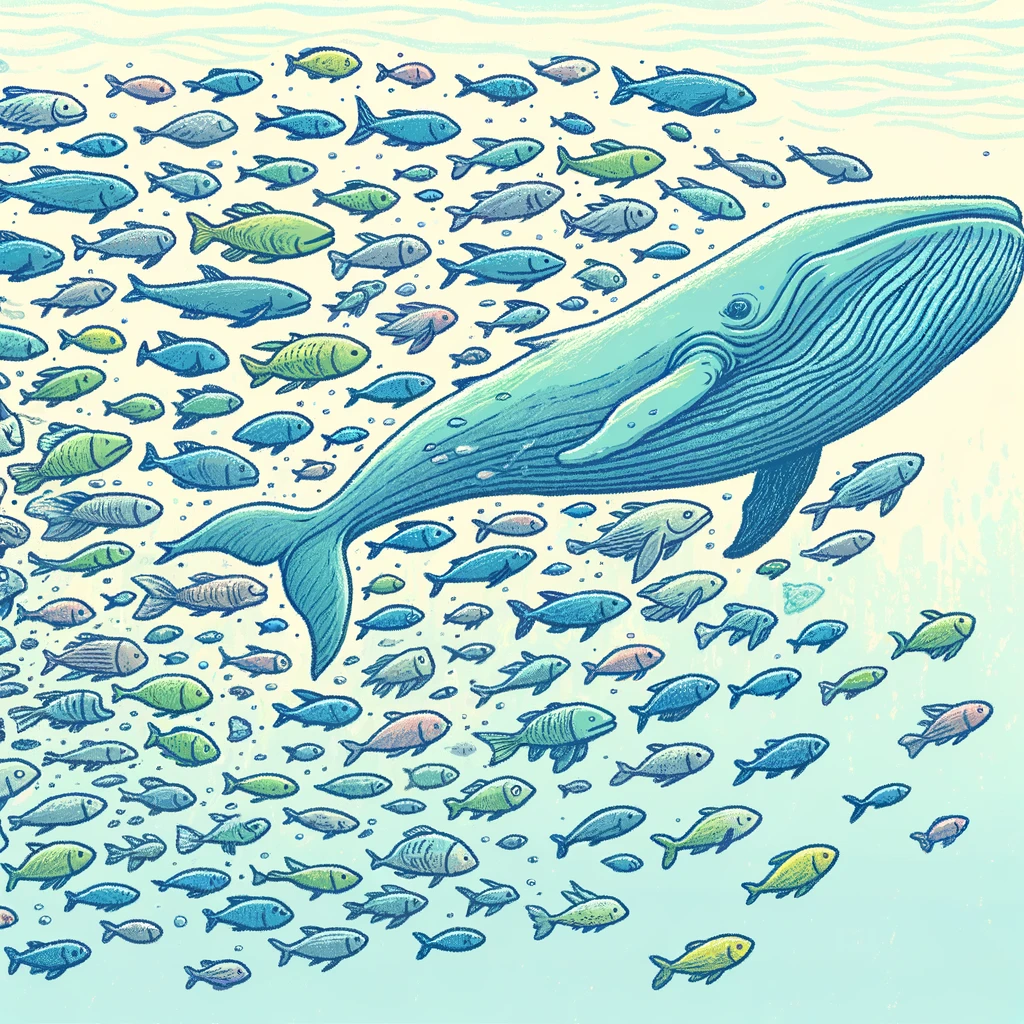
<p>One of the things that struck me most was how VCs - venture capitalists and investment funds - rely heavily on second-order observations. Here’s what I mean: Typically, there’s a lead investor who provides a significant portion of the funding. Other investors may contribute smaller amounts. While these smaller checks don’t mean much by themselves, they add up. When a big-name VC invests, it creates a ripple effect. Others follow because “if X invested, there must be something worth investing in. These big players are seen as having done their homework. It’s a generalization, sure, but one that’s easy to see in headlines and trends. Just think about how many funds have started investing in AI en masse since 2020-2021.</p>

<p><img src="/assets/images/240422-1.png" alt="A whale followed by a school of fish" /></p>

<p>Isn’t that how we all operate, even in our personal lives? We take our cues from friends, listen to experts, and often skip our own due diligence. It’s a form of mimicry, doing what others tell us to do. It would be overwhelming to question every decision thoroughly.</p>

<p>I assumed VCs would be more methodical, given the large amounts of money involved. I thought they would follow a strict investment thesis and process. They would believe in a future trend and see if startups were aligned with that vision. But it seems that this mimicry is prevalent in many areas, not just VCs. To expect anything different may be naive.</p>

<p>This brings to mind the Pareto Principle, where 80% of the effects come from 20% of the causes. In this case, we have a similar situation where 80% of VCs follow the 20% of the most successful VCs. It could be even more skewed. This is similar to the rise of copy trading in the financial world over the last five years, where investors simply mirror the trades of those they follow.</p>

<p>It’s not necessarily wrong; it makes sense. But it suggests a lot of inefficiency. When everyone is following the “big fish,” some opportunities are missed. These missed opportunities could be ripe for first-principle or contrarian investing - steering clear of crowded areas to find less obvious, but promising, opportunities.</p>

<p>I recently found a website listing industries by TAM (total addressable market) and capital invested. As an overlooked industry example, the petrochemical market has a TAM of 700 billion, but only 93 million invested per year. How many examples like this are out there?</p>

<p>I wonder if this pattern of behavior extends beyond investing to other aspects of life. The tendency to follow leads without deep investigation may be a common thread. But in the startup and VC world, where innovation and unique value propositions are prized, it’s curious that investment strategies often boil down to following the crowd.</p>

<p>Perhaps there’s room for a more principled approach that could uncover hidden gems that the crowd has overlooked. This idea, which I’ve come to call “Pareto validation,” suggests that sometimes the best path forward may be the one less traveled, guided by independent analysis rather than the movements of the crowd.</p>]]></content><author><name></name></author><summary type="html"><![CDATA[During my university years and a little bit after, I was involved in the VC and startup scene where I lived. Especially during university, I was the president of a student association for tech entrepreneurship, I got to meet a lot of investors. I spent time in incubators and accelerators. Talking to founders about raising money and witnessing some seed and series A rounds was part of my routine.]]></summary></entry><entry><title type="html">Tight-knit teams</title><link href="https://spaccapeli.com/tight-knit-teams/" rel="alternate" type="text/html" title="Tight-knit teams" /><published>2024-04-08T00:00:00+00:00</published><updated>2024-04-08T00:00:00+00:00</updated><id>https://spaccapeli.com/tight-knit-teams</id><content type="html" xml:base="https://spaccapeli.com/tight-knit-teams/"><![CDATA[<p>Everyone talks about mission and values in the workplace. But I often think that if your team gets along well, what you’re working on might not matter much. This mission that everyone talks about is like a carrot dangled in front of you to keep you from hating your job. It’s the company’s attempt to replace religion by taking up more space and trying to give us a sense of higher purpose.</p>

<p><img src="/assets/images/240408-1.png" alt="A group of people knitting" /></p>

<p>Honestly, when I look back on my work experiences, it’s not the problems I solved or the technology I used that I remember. It’s the fun, the laughter, and the connections I made with my colleagues. People crave social connections. We’re social creatures. These feelings really give you an edge, not only in your personal life, but also in getting through the inevitable work setbacks.</p>

<p>Two occasions from my past come to mind, each with its own dynamic. Each is due to different reasons that I can rationalize. In the first, the leader surrounded himself with friends. He almost hired whoever could contribute the most to the team’s attitude. His enthusiasm was contagious. The team stayed positive and thrived in that atmosphere, whether we succeeded or not. Maybe it was just luck, maybe we were just the first people he found. I never asked.</p>

<p>On the second occasion, the team was like a diamond formed under pressure. We bonded over shared challenges, watching each other’s backs. There was no room for enemies or office politics. Tired and working late, we’d cheer each other on for another hour.</p>

<p>Outside of work, time spent together counts. But what makes a team feel so good? It’s a mystery to me, like the Coca-Cola formula. Maybe it’s just a coincidence.</p>

<p>Years later, I keep in touch with those colleagues. I really want to know how they are doing and root for their success. But most of all, I just want another drink…</p>]]></content><author><name></name></author><summary type="html"><![CDATA[Everyone talks about mission and values in the workplace. But I often think that if your team gets along well, what you’re working on might not matter much. This mission that everyone talks about is like a carrot dangled in front of you to keep you from hating your job. It’s the company’s attempt to replace religion by taking up more space and trying to give us a sense of higher purpose.]]></summary></entry><entry><title type="html">Managing is like training a neural network</title><link href="https://spaccapeli.com/managing-is-like-training-a-neural-network/" rel="alternate" type="text/html" title="Managing is like training a neural network" /><published>2024-03-11T00:00:00+00:00</published><updated>2024-03-11T00:00:00+00:00</updated><id>https://spaccapeli.com/managing-is-like-training-a-neural-network</id><content type="html" xml:base="https://spaccapeli.com/managing-is-like-training-a-neural-network/"><![CDATA[<p>I don’t get to talk about this often, but before working in product management and design, I studied for a master’s degree in machine learning.</p>

<p>Driven by an interest in pursuing artificial general intelligence, my thesis focused on deep learning. However, life’s path led me away from that field and towards product design. I like to think that because of this background, or my natural disposition, I always see the world through the lens of data.</p>

<p><img src="/assets/images/240311-1.png" alt="A lecturer in front of a whiteboard" /></p>

<p>“Leading a team is like working with neural networks.” I don’t know where I first heard this metaphor, but it resonated with me. To me, this metaphor captures the essence of leading a team, especially one that is either inexperienced or unaccustomed to working together. An untrained team, much like an untrained neural network, cannot be expected to produce exceptional results right out of the gate.</p>

<p>Here I must interject for the super-sensitive reader: the term “training” a team is metaphorical and not to be taken in a literal, authoritarian sense.</p>

<p>In managing such a team, you seem to have two choices:</p>

<ol>
  <li>
    <p>Be super hands-on. Tell the team exactly what you want, show them how to do things, constantly refine processes, and demand that everything be exactly the way you want it. Basically, write an algorithm for how your team should work. All those hundreds of conditions and panic when something crashes.</p>
  </li>
  <li>
    <p>“Show” them multiple inputs (constraints, guidelines, resources) and corresponding outputs (what exactly you expect to happen), let the team work on it, and iterate the process with short feedback cycles. This, by the way, is the true spirit and ethos of Agile. The original one, anyway. Showing and expecting an outcome.</p>
  </li>
</ol>

<p>Although the latter method may seem slower and riskier at first. It is not as obvious that it will yield results, but the gamble can pay off. Like training a neural network, it is not always a sure thing. You can still screw it up. However, there are two big advantages:</p>

<ol>
  <li>
    <p>It’s less work for the manager. A lot less work. It may not seem like it at first. It may be more nerve-wracking. But it’s less work up front. You don’t have to write all the processes: the Ifs and Elses of an algorithm.</p>
  </li>
  <li>
    <p>It builds the confidence of the team. The team is doing the work, they are the ones learning and improving their processes. You also have to guide the team a little bit in the beginning, of course, it’s not completely hands off. You have to prepare the training set. Or if you prepare another metaphor, it is a bit like learning to ride a bike for the first time. You start with one direction and two training wheels. Then you gradually take off the training wheels as the team gains confidence and rides off into the sunset.</p>
  </li>
</ol>

<p>Managing a team in this way is like training a neural network. It’s an approach not without risk, but one that can lead to robust, self-improving systems. It’s certainly not the only way to build a system, but I think there’s a reason why deep learning has been so hyped lately. Maybe it’s worth a try and give autonomy to your team?</p>]]></content><author><name></name></author><summary type="html"><![CDATA[I don’t get to talk about this often, but before working in product management and design, I studied for a master’s degree in machine learning.]]></summary></entry><entry><title type="html">Play nice with your siblings</title><link href="https://spaccapeli.com/play-nice-with-your-siblings/" rel="alternate" type="text/html" title="Play nice with your siblings" /><published>2024-02-26T00:00:00+00:00</published><updated>2024-02-26T00:00:00+00:00</updated><id>https://spaccapeli.com/play-nice-with-your-siblings</id><content type="html" xml:base="https://spaccapeli.com/play-nice-with-your-siblings/"><![CDATA[<p>Sometimes being a manager is like being a child in a large family. Fighting for your parents’ attention (leadership), sharing toys (resources), bickering about the next holiday/weekend plans (shared goals), etc. And in every big family, there is something you (should) learn as you grow up: how to play nice with each other.</p>

<p><img src="/assets/images/240226-1.png" alt="Sibling playing with each other" /></p>

<p>Let’s take a step back. Management is a multidimensional problem.”What do you mean by that fancy term? Think of it as navigating two primary axes: outward and inward.</p>

<p>Outwardly, you’re a provider. You are building something for someone. Outside of your team, outside of your organization. Understanding their needs, responding to their feedback, and delivering results. There are plenty of books written about that.</p>

<p>Inwardly, it’s about navigating the internal landscape of your organization. Which sometimes, especially in large organizations, can get very complex very quickly. Tangentially, that’s one of the reasons why companies slow down as they get bigger: they focus more on the growing internal complexity than they do on their customers. Internally, we can focus on three dimensions: upward management (read “Managing Up”), downward management (despite the unflattering term, read “Rally The Troops”), and, crucially, lateral coordination with your peers - or as I’d prefer to frame it, your sibling teams.</p>

<p>Let’s focus on the lateral aspect, an often overlooked but immensely important topic. These sibling teams include different departments: Product, R&amp;D, Marketing, Sales. If they’re upstream or downstream of your own team’s user value, they’re the ones I’m talking about. These are the teams you’ll be coordinating with on a regular basis, aligning priorities and plans.</p>

<p>Next to your performance, their opinion of you is the second biggest influence on what your manager thinks of your team.</p>

<p>There are a few things to consider when dealing with your siblings:</p>

<ul>
  <li>Understand their incentives. What is their goal, their need, their fear? Finding common ground for collaboration can provide insight into their actions and potential synergies.</li>
  <li>Play the long game. It’s not about winning over each other. Teams are, or at least should be, long-term. Relationships take time and effort to build and maintain. And they are easy to destroy. Make decisions that minimize the downside for both parties, and be consistently reliable.</li>
  <li>Don’t be strangers. I’ve often seen teams that barely know what the other teams are doing. Even who is working on what is unclear. Take the initiative to understand their projects and share knowledge. Be social. It can shed some light on their work context and make each other more approachable.</li>
</ul>

<p>Resources are often scarce and shared across departments. Time in meetings is limited, as is the spotlight. As much as we’d like to think otherwise, there’s an inherent competitive element. But it should be a friendly rivalry, supportive, like in a family. Progress together, understand each other’s goals, and play the long game. Play nice with your siblings. Be there for each other, understand what you want, play the long game.</p>]]></content><author><name></name></author><summary type="html"><![CDATA[Sometimes being a manager is like being a child in a large family. Fighting for your parents’ attention (leadership), sharing toys (resources), bickering about the next holiday/weekend plans (shared goals), etc. And in every big family, there is something you (should) learn as you grow up: how to play nice with each other.]]></summary></entry><entry><title type="html">Managing up</title><link href="https://spaccapeli.com/managing-up/" rel="alternate" type="text/html" title="Managing up" /><published>2024-02-19T00:00:00+00:00</published><updated>2024-02-19T00:00:00+00:00</updated><id>https://spaccapeli.com/managing-up</id><content type="html" xml:base="https://spaccapeli.com/managing-up/"><![CDATA[<p>Leading a team is only a fraction of a manager’s responsibilities. When I became a manager, my world revolved around my product and my team. I was constantly thinking about the needs of our users. Delivering on promises and creating value for customers with the resources available were my primary concerns.</p>

<p><img src="/assets/images/240219-1.png" alt="A person inside of a triangle" /></p>

<p>Over time, however, I realized that managing isn’t just about customer focus. It’s equally about nurturing your team’s growth and satisfaction. It’s a hefty role; the team isn’t your only concern however. Sometimes, it’s crucial to focus ‘upwards’—towards your manager. This perspective can greatly benefit you and your team.</p>

<p>Your manager doesn’t just oversee your team; they’re an enabler, shielding you and supporting your team’s growth. They’re the key to giving your team autonomy. Everyone craves creativity and freedom to make decisions in their work, especially in knowledge-based fields. We want to be more than just cogs in a big machine.</p>

<p>A good manager’s confidence in their team’s abilities can increase their autonomy. I believe autonomy is an important professional goal that deserves its own discussion.</p>

<p>These are the four takeaways to keep in mind when starting out as a new manager:</p>

<ol>
  <li>
    <p>Set clear expectations: Understand the benchmarks for you and your team. Without clarity, you’re navigating blindly. Knowing what you’re being measured against helps you focus your efforts and build a track record, which in return builds trust.</p>
  </li>
  <li>
    <p>Minimize their workload: Strive to make your team self-sufficient. You should be on a steady upward trajectory, meeting agreed-upon metrics. Always be prepared, understand your needs, options and trade-offs. This shows not only control, but respect for your manager’s time.</p>
  </li>
  <li>
    <p>Showcase team contributions: Remember that you’re part of a team, not a lone wolf. Transparency is key. Acknowledging individual strengths and weaknesses can highlight areas where your manager’s guidance can be invaluable.</p>
  </li>
  <li>
    <p>Be open about challenges: It’s not all positive. Acknowledge when things aren’t great. Addressing problems is the first step to solving them. But balance is key - be a realistic optimist.</p>
  </li>
</ol>

<p>Remember that leading a team is only part of your role. Looking in all directions, especially upwards, can bring significant benefits. And never overlook one of the most important “users” of your team: your manager.</p>]]></content><author><name></name></author><summary type="html"><![CDATA[Leading a team is only a fraction of a manager’s responsibilities. When I became a manager, my world revolved around my product and my team. I was constantly thinking about the needs of our users. Delivering on promises and creating value for customers with the resources available were my primary concerns.]]></summary></entry><entry><title type="html">Rally the troops</title><link href="https://spaccapeli.com/rally-the-troops/" rel="alternate" type="text/html" title="Rally the troops" /><published>2024-01-29T00:00:00+00:00</published><updated>2024-01-29T00:00:00+00:00</updated><id>https://spaccapeli.com/rally-the-troops</id><content type="html" xml:base="https://spaccapeli.com/rally-the-troops/"><![CDATA[<p>Leading a team involves many tasks. Every day, we align goals, set priorities, shield ourselves from distractions, and consider the next steps. But we often skip over explaining the why. We assume that the clarity of the goal is motivation enough. “Hit Q4 targets,” “Keep us afloat,” “Save customers time”-are you excited? We often forget an important aspect that leaders should keep in mind: Motivation and Emotion.</p>

<p>How do we effectively “rally the troops”?</p>

<p><img src="/assets/images/240129-1.png" alt="A person celebrating" /></p>

<p>But first, why would we want to do this? Camaraderie brings joy and focus. It’s not just good for the company to have more engaged and focused employees. It’s also a personal boon. Positive emotions enhance learning, strengthen social connections, and increase happiness in other areas of life.</p>

<p>This topic could fill a book, but let’s focus on three actions:</p>

<p>First, identify an adversary. Every compelling story has a villain. Leadership is about weaving stories. Remember, there is no memorable story without an antagonist. There’s no Luke without Darth Vader.</p>

<p>Second, discuss and practice tactics. Think of this as preparing for a strategic battle. Before each skirmish, you prepare for weeks: you know the terrain, you know what to expect from your teammates, you know what is expected of you, you know what is at stake. Avoid rash attacks. Often, teams seem to just jump blindly into an area, all yelling at a target, dealing with problems as they arise.</p>

<p>And I’m not talking about something as specific and mundane as a “sprint. Think beyond that, to the corporate strategy. Adaptability is key, but a clear understanding of the larger strategy and specific tactics is critical. Their role should be clear. Set specific expectations that can be targeted and rewarded.</p>

<p>Third, foster trust. The ultimate foundation for success is trust. It’s essential that team members rely on each other’s commitment and presence. You need to know that people will do what they say they will do and be where they say they will be. How is this achieved? Through a solid track record and demonstration of selflessness. Trust is built over time and through consistent, reliable actions. But be careful, trust is hard to earn and easy to lose.</p>

<p>Injecting a little emotion adds fun to the mix. Life is too short to just show up. Don’t march mindlessly, sing a few songs at the company party, paint a target to conquer, make up a story. It’s more than just leading - it’s about rallying the troops with purpose and passion.</p>]]></content><author><name></name></author><summary type="html"><![CDATA[Leading a team involves many tasks. Every day, we align goals, set priorities, shield ourselves from distractions, and consider the next steps. But we often skip over explaining the why. We assume that the clarity of the goal is motivation enough. “Hit Q4 targets,” “Keep us afloat,” “Save customers time”-are you excited? We often forget an important aspect that leaders should keep in mind: Motivation and Emotion.]]></summary></entry><entry><title type="html">Refined-like responses</title><link href="https://spaccapeli.com/refined-like-responses/" rel="alternate" type="text/html" title="Refined-like responses" /><published>2024-01-14T00:00:00+00:00</published><updated>2024-01-14T00:00:00+00:00</updated><id>https://spaccapeli.com/refined-like-responses</id><content type="html" xml:base="https://spaccapeli.com/refined-like-responses/"><![CDATA[<p>I read Creative Selection by Ken Kocienda. It’s been over a year, but the book is still with me. Kocienda dives into his journey at Apple, from the creation of Safari to the idea and development of how a touchscreen mobile keyboard should behave. What makes this book fascinating is the glimpse into the world of Apple - a world shrouded in secrecy, especially when it comes to product development.</p>

<p>The book also sheds light on Steve Jobs, an enigmatic and polarizing figure in technology. Kocienda’s anecdotes and insights are fascinating.</p>

<p>The book is full of gems. Well worth reading.</p>

<p><img src="/assets/images/240114-1.png" alt="A person holding its chest" /></p>

<p>The idea, as I understand it, is to trust your gut when making product decisions. Call it “product sense” or “instinct”. Essentially, it’s about listening to your inner voice when making product decisions without waiting for user feedback. It’s the Steve Jobs approach.</p>

<p>Take, for example, the decision to add a new feature. The refined-like response approach suggests that if you (believe you) deeply understand your users and their context, you shouldn’t wait for user feedback. Instead, iterate internally and go ahead with the feature.</p>

<p>But this strategy isn’t for everyone, especially if you’re new to product development. Beginners are advised to experiment and explore. Without experience, gut feelings are just guesses.</p>

<p>Relying on instinct without a foundation of experience is risky - it is untested and unproven. And to be honest, experience alone isn’t always enough. A systematic approach to getting results, even if it’s slower, is often preferable.</p>

<p>However, for those with experience, developing and relying on “refined-like responses” can be invaluable. This is what companies look for in experienced product professionals. The ability to make quick, accurate decisions can save immense amounts of time. Plus, there’s a certain charisma that comes with being right most of the time.</p>

<p>Hiring for this skill is difficult. Common methods include product design interviews and measuring years of industry experience. The assumption is that experience equals exposure. I don’t have solid advice on this yet.</p>

<p>So what if you think you have this refined gut instinct? My advice is to proceed with caution. Be humble. Avoid arrogance. Articulating product decisions based on instinct can be challenging. Sometimes you can rationalize your choices, and sometimes you can’t. It’s okay to admit that it’s just a hunch.</p>]]></content><author><name></name></author><summary type="html"><![CDATA[I read Creative Selection by Ken Kocienda. It’s been over a year, but the book is still with me. Kocienda dives into his journey at Apple, from the creation of Safari to the idea and development of how a touchscreen mobile keyboard should behave. What makes this book fascinating is the glimpse into the world of Apple - a world shrouded in secrecy, especially when it comes to product development.]]></summary></entry><entry><title type="html">The fish becomes stinky from the head</title><link href="https://spaccapeli.com/the-fish-becomes-stinky-from-the-head/" rel="alternate" type="text/html" title="The fish becomes stinky from the head" /><published>2023-12-21T00:00:00+00:00</published><updated>2023-12-21T00:00:00+00:00</updated><id>https://spaccapeli.com/the-fish-becomes-stinky-from-the-head</id><content type="html" xml:base="https://spaccapeli.com/the-fish-becomes-stinky-from-the-head/"><![CDATA[<p>In any organization, the tone of the culture is set at the top. This truth is as old as organizations themselves. And like a fish that begins to rot from the head down, a company’s culture can deteriorate in a similar way. You say a fish rots from the head down, right? Well, the same is true for corporate cultures. It’s really naive to think otherwise. And you should think of the “head” not only as a matter of formal power, but also as a matter of influence.</p>

<p>Here’s the thing: leaders and senior people in a company are not just decision-makers. They’re tone setters.</p>

<p><img src="/assets/images/231221-1.png" alt="A person with the head of a fish" /></p>

<p>Executives and senior managers don’t just run operations; they set the boundaries for your actions. Their decisions, behaviors, and attitudes create ripples that touch every corner of the organization. When I write about people in “power,” I include not only management, but also senior leaders who serve as implicit role models through social capital and soft power.</p>

<p>Your boss, your boss’s boss, that senior engineer—they’re not just colleagues. They’re your professional role models, for better or for worse. People look up to them or exist in a framework where they are judged by them. So one of the things to think about in a workplace is whether you look up to your seniors.</p>

<p>It’s not just about what those role models do on purpose. The little things, the offhand comments, the habits—they all add up. They shape the air everyone breathes at work. Leaders and executives are not just influences; they shape the behaviors and attitudes of their teams.</p>

<p>It’s similar to the concept that you are the average of the five people you spend the most time with. In a professional setting, this idea takes on a more intense form.</p>

<p>Now here’s a common trap: thinking that new hires, especially those without power, can turn around a sour culture. That’s like asking someone to clean up the ocean with a teaspoon.</p>

<p>Sure, they may make tiny ripples, but the tide is against them. The ability of these employees to effect meaningful change is often drastically limited. While they can make a difference, the energy and emotional toll required to initiate company-wide behavioral change is enormous. Many burn out after making a small improvement, becoming expendable change agents.</p>

<p>The only viable strategy for them is often to create a small bubble of influence where they can exert some control. Ultimately, however, it is the managers and senior leaders who have the final say.</p>

<p>The structure of the organization, hierarchical or not, doesn’t change this dynamic in any meaningful way. I will leave the false promises of “flat hierarchies” for another time. Hierarchies exist, visible or invisible, codified or implicit. Power is in influence, not in titles.</p>

<p>In addressing these challenges, leaders should seek feedback on how they are doing. They should create frameworks that encourage more frequent exchanges. They should provide not only autonomy but also support for individual contributors. However, it’s important to recognize that management is often a bottleneck in these processes. Management is hard. It’s about striking a balance between guiding and letting go.</p>

<p>There’s no magic solution. It’s hard to fix a situation where your management class is bad. You need to have a solid process for promoting people into leadership positions.</p>

<p>But promoting the right people is more art than science. It’s about having a holistic ability to understand who you have in front of you and their potential. It’s not easy.</p>

<p>Ultimately, if management and senior staff are not aligned with your vision and work ethic, and do not possess the qualities of good coaches, there is little room for change. So, just remember that before you jump ship to a new company, you should do your homework. Talk to the people in charge where you want to land if you can. And if you find a good environment, cherish it.</p>

<p>Good cultures are rare. Remember, “the fish becomes stinky from the head.” Don’t wait until you smell the rot to realize what’s going on.</p>]]></content><author><name></name></author><summary type="html"><![CDATA[In any organization, the tone of the culture is set at the top. This truth is as old as organizations themselves. And like a fish that begins to rot from the head down, a company’s culture can deteriorate in a similar way. You say a fish rots from the head down, right? Well, the same is true for corporate cultures. It’s really naive to think otherwise. And you should think of the “head” not only as a matter of formal power, but also as a matter of influence.]]></summary></entry><entry><title type="html">It is time to retire user experience and design</title><link href="https://spaccapeli.com/it-is-time-to-retire-user-experience-and-design/" rel="alternate" type="text/html" title="It is time to retire user experience and design" /><published>2023-12-17T00:00:00+00:00</published><updated>2023-12-17T00:00:00+00:00</updated><id>https://spaccapeli.com/it-is-time-to-retire-user-experience-and-design</id><content type="html" xml:base="https://spaccapeli.com/it-is-time-to-retire-user-experience-and-design/"><![CDATA[<p>The terms “user experience” (UX) and “design” have become common parlance in modern tech teams. Fulfilling the dreams of UX pioneers. “UX here, customer-focused there”. We are even starting to talk about design-led companies (e.g., Airbnb). However, these terms are still confusing. Unlike the role of a software engineer, the responsibilities of a user experience designer are still often unclear. What a user experience designer does in different companies can be quite different. In some places, a designer is there to support the work through workshops and collaborative sessions. In others, it is about talking to users and understanding their needs. But if we are honest, most people think that a designer is there to push pixels, create a pretty interface, and get out of the way. And I think this is in part to the term.</p>

<p><img src="/assets/images/231217-1.png" alt="People having a party" /></p>

<p>What is one of my main problems with the term user experience? The concept of UX is not the responsibility of a single role. In reality, everyone involved in product development contributes to the user experience. A software engineer’s work, such as reducing an application’s load time from 2 seconds to 200 milliseconds, is often one of the most impactful activities. From both a business and a user perspective. If everyone is responsible for the UX, what does a UX person do? “If we are writing code, I guess they must be making it nice”.</p>

<p>The term “designer” is also often misunderstood. Many perceive designers as visual artists, but the design should go well beyond aesthetics. It should include research, user interaction, facilitating goal-setting processes, and more. But again, to be honest, the term designer is so inflated. Everyone is a designer. Even engineers do ‘system design’.</p>

<p>The current use of these terms is full of loaded prejudices. They are often viewed through a specific lens. Focusing on the visual elements and neglecting the large submerged part of the responsibility-iceberg. This limits the understanding of what professionals in the field do and shapes the expectations of those entering the industry. Can we save the ship from colliding with the iceberg?</p>

<p>To get away from these misconceptions, we should rethink the terminology. After discovering the work of Christopher Alexander, I found a compelling alternative to draw a parallel with architecture. We think of architects not just for drawing floor plans, but for their holistic approach to the needs of a building’s occupants. We need to do the same for digital product design roles. We should use terms like ‘product architect’, ‘digital architect’, or ‘experience architect’. This would make it clear to the vast majority of people what the work of a digital designer is really about.</p>

<p>Product architect or digital architect embodies what a designer has always been meant to do, but often hasn’t been empowered to do. This role is about understanding users, synthesizing possibilities, and creating digital spaces that are livable and intuitive. It shifts the focus from mere appearance to the substance of design. While there may be some overlap with the role of a product manager, I will (conveniently) leave that aspect for another time.</p>

<p>The introduction of new terminology such as ‘product architect’ would not be a breakthrough in the way design is perceived in the technology industry, but it does challenge professionals and the public to ask, “Why are they using this term?.”</p>

<p>It’s time to retire ‘user experience’ and ‘design’ as we know them. This shift should emphasize the true value these roles bring to product development: empowering users through functional, thoughtful design rather than a “nice paint job”. Or at least will give the 80% of people that don’t bother to understand UX a picture closer to reality.</p>]]></content><author><name></name></author><summary type="html"><![CDATA[The terms “user experience” (UX) and “design” have become common parlance in modern tech teams. Fulfilling the dreams of UX pioneers. “UX here, customer-focused there”. We are even starting to talk about design-led companies (e.g., Airbnb). However, these terms are still confusing. Unlike the role of a software engineer, the responsibilities of a user experience designer are still often unclear. What a user experience designer does in different companies can be quite different. In some places, a designer is there to support the work through workshops and collaborative sessions. In others, it is about talking to users and understanding their needs. But if we are honest, most people think that a designer is there to push pixels, create a pretty interface, and get out of the way. And I think this is in part to the term.]]></summary></entry><entry><title type="html">People still buy tulips</title><link href="https://spaccapeli.com/people-still-buy-tulips/" rel="alternate" type="text/html" title="People still buy tulips" /><published>2023-11-28T00:00:00+00:00</published><updated>2023-11-28T00:00:00+00:00</updated><id>https://spaccapeli.com/people-still-buy-tulips</id><content type="html" xml:base="https://spaccapeli.com/people-still-buy-tulips/"><![CDATA[<p>In the history of the world economy, few stories capture the imagination quite like the Dutch Tulip Mania of the 17th century. This episode, often regarded as the first recorded financial bubble, serves as a reminder of the cyclical nature of markets and the human tendency towards speculation. Nowadays, these patterns of boom and bust continue to manifest in new forms and contexts. What can we learn about these cycles?</p>

<p><img src="/assets/images/231128-1.png" alt="A person holding a basket of flowers" /></p>

<p>The tulip, a seemingly innocuous flower, became the centerpiece of a speculative bubble in the Netherlands during the early 17th century. Prices of tulip bulbs skyrocketed to astronomical levels, only to crash spectacularly in the span of a month, leaving many investors ruined. This episode was not an example of extreme horticultural interest but an example of market psychology and the danger of speculation. The parallels between the emotional and economic dynamics of the Tulip Mania and modern financial bubbles are striking and instructive.</p>

<p>Let’s take a look at cryptocurrencies for example. Its market bears a striking resemblance to the tulip frenzy. I wrote about this 5 years ago before the rise and crash of Bitcoin. Cryptocurrencies between 2019 and 2022 have experienced meteoric rises and precipitous falls, driven by a mix of innovation, speculation, and investor sentiment. I saw it, and I wrote about it. Despite that I didn’t take advantage of it. Thinking the fall was always one week away.</p>

<p>Financial markets often exhibit a pattern where a surge in demand leads to a peak, followed by a decline, settling at a plateau higher than the initial starting point. This is what I would like you to focus on.</p>

<p>The plateau is often higher than the initial starting point.</p>

<p><img src="/assets/images/231128-2.png" alt="A graph of a function" /></p>

<p>Understanding this pattern is crucial for investors and entrepreneurs looking for opportunities. Being early is often good enough, despite being in the middle of a bubble. As long as you realize what you are doing and are not too greedy.</p>

<p>This is where the secret to successful investing often lies: timing. Knowing when to enter and exit a market can be the difference between success and failure. Jeff Bezos’s decision to launch Amazon was influenced by his observation of projected internet’s growth. It is an example of leveraging timing to one’s advantage. This principle extends across industries.</p>

<p>As we look to the future, the question arises: What are the next ‘bubbles’ or high-growth areas? Sectors like Artificial Intelligence and renewable energy present potential opportunities for explosive growth. Identifying and riding these waves requires an understanding of technology and markets and an insight into human behavior and societal trends.</p>

<p>Take Artificial Intelligence. Everybody talks about it. It feels like we are in a bubble. But are we at the peak? Is the status quo going to plateau at a higher level than today? That seems likely.</p>

<p>It is not too late.</p>

<p>The story of the tulip, while centuries old, offers lessons for modern investors and entrepreneurs. By studying past bubbles, like the Tulip Mania, and understanding their modern counterparts, such as the cryptocurrency market, we can better understand our turbulent economic times. And if you find a new Tulip, don’t get discouraged by the hype, start working on it. The plateau may still be higher than where you are. Remember, people still buy tulips.</p>]]></content><author><name></name></author><summary type="html"><![CDATA[In the history of the world economy, few stories capture the imagination quite like the Dutch Tulip Mania of the 17th century. This episode, often regarded as the first recorded financial bubble, serves as a reminder of the cyclical nature of markets and the human tendency towards speculation. Nowadays, these patterns of boom and bust continue to manifest in new forms and contexts. What can we learn about these cycles?]]></summary></entry></feed>